
Category: skills tip

  • Technical Riding Tips: MTB

    Technical Riding Tips: MTB

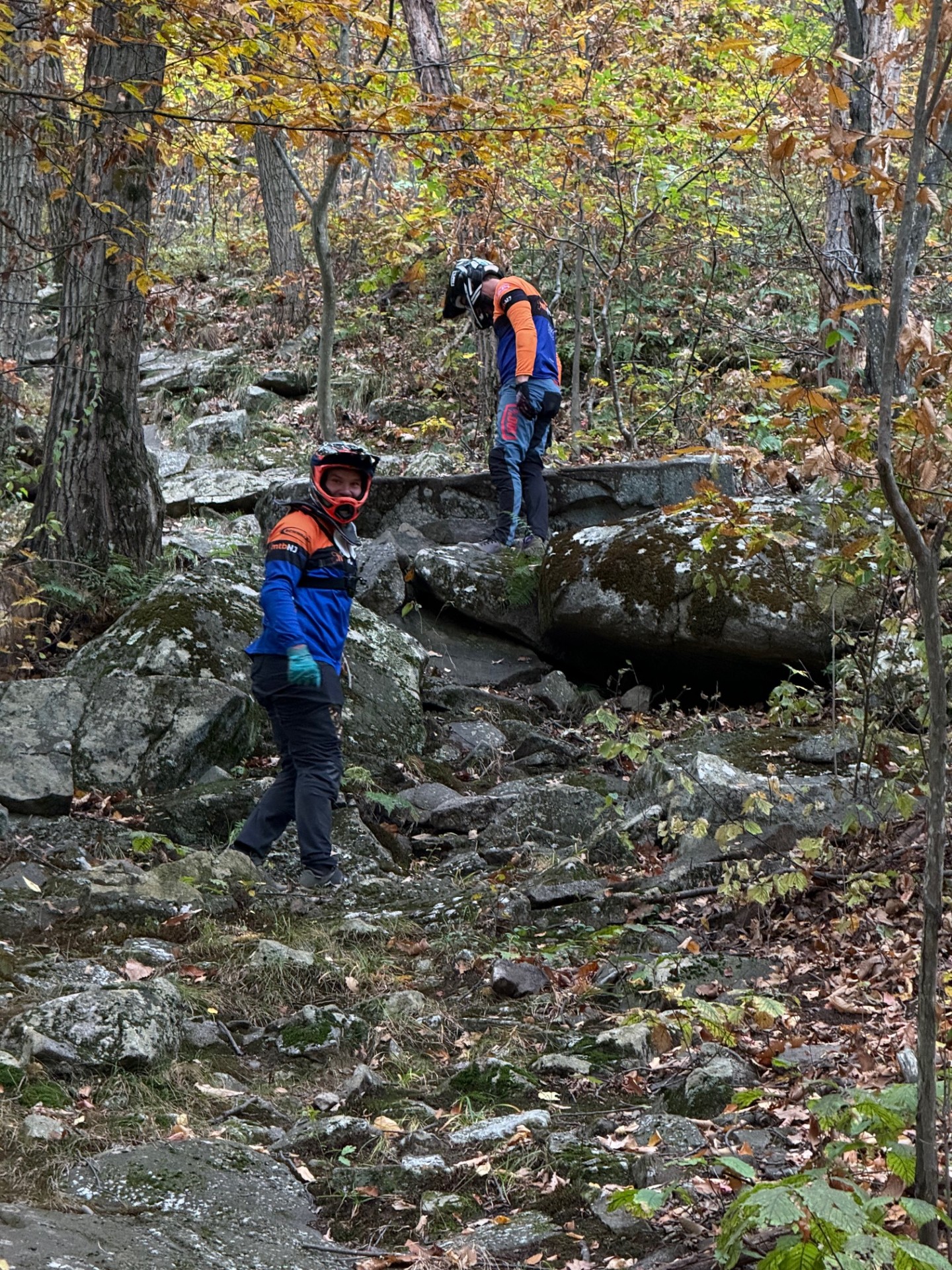
    Technical riding is not your typical cruise through the park. It’s about picking your way through rocks and roots, muscling up steep pitches, navigating awkward slabs, managing tire grip on sheer rollers and keeping momentum on trails that seem designed to throw you off your line.

    Northern NJ is packed with this kind of terrain—one brutal, character-building trail system after another. For many new riders, these early experiences are affectionately called “death marches.” But once things start to click, technical riding becomes addictive: a puzzle, a challenge, and a whole new style of fun.

    Here are four practical tips to help you improve—and maybe even start enjoying—technical mountain biking.

    LEG STRENGTH FOR POWER ON DEMAND

    Raw power is one of your biggest assets on technical trails. Yes, aerobic fitness matters. But technical riding is dominated by short, high-intensity, repeatable efforts—those quick torque bursts needed when your momentum stalls.

    Slow speeds on chunky terrain require more force to keep the bike moving. Whether you’re grinding up a steep boulder, pushing through sandy patches, or clawing over an off-camber slab, strong legs give you a massive advantage.

    Tip 1: Build raw leg strength.

    Mix these movements into your weekly routine:

    At the gym:

    • Leg presses
    • Squats
    • Leg extensions
    • Leg curls

    At a park:

    • Bench step-ups
    • Box jumps
    • Walking lunges
    • Squat jumps

    At home:

    • Body-weight squats
    • Bulgarian (Hungarian) split squats
    • Single-leg squats
    • Front/back lunges
    • Mountain climbers
    • Glute bridges

    Short on time?
    Work “exercise snacks” into daily life. Do 10 squats before leaving the bathroom, or hit a few bench step-ups during your dog walk. Little bursts add up.

    MASTER SLOW-SPEED BALANCE

    Momentum is your friend—but technical trails often don’t give you much of it. When your speed drops, you have to do more work to balance the bike. Excellent slow-speed control is what allows skilled riders to make awkward moves look easy.

    Balance is also crucial in group rides. If the person ahead of you dabs or stops, being able to track stand or crawl forward buys you time and space without putting a foot down.

    Tip 2: Practice Track Stands & Slow Riding

    The simplest drill? Ride as slowly as possible. From there, work toward track standing:

    1. Roll to a near-stop.
    2. Pause for a moment.
    3. When you start to tip, add just enough pedal pressure to regain balance.
    4. Slow again and repeat.

    Over time you’ll build the core and stabilizer strength that makes technical balancing second nature.

    It’s easy to practice:

    • While waiting in the parking lot
    • During regroup stops
    • At the trailhead after your ride
    • Anytime you roll up to your car

    The more often you practice, the better your balance becomes.
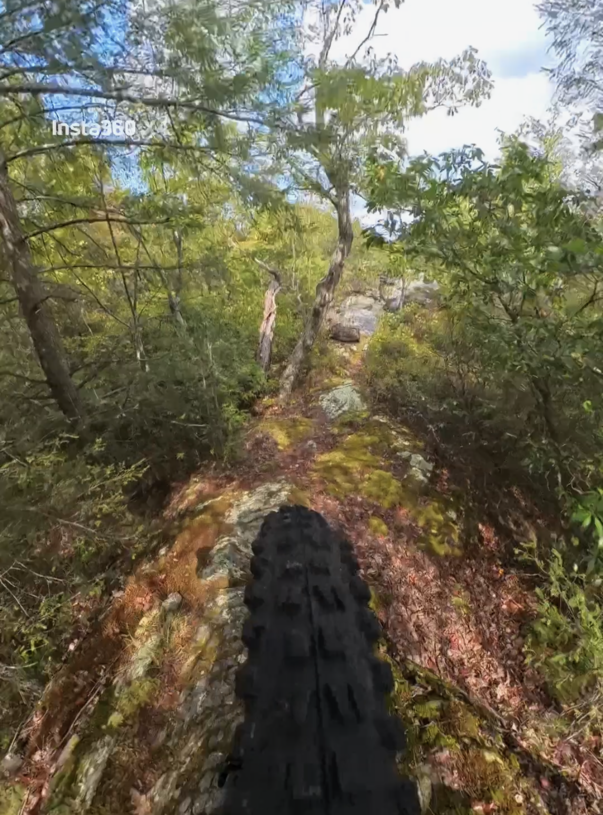
    rocky terrain

    TRAIN YOUR NON-LEAD LEG

    Every rider has a “default” foot that naturally goes forward when standing on level pedals. That’s fine—until the trail throws something at you when you’re leading with the wrong foot.

    On technical trails, with back to back obstacles you rarely have time to swap feet before a drop, roller, or awkward feature. Being comfortable with either leg forward is a major advantage and helps prevent those moments where riders panic, bail, or slam on the brakes.

    Tip 3: Develop Your Non-Lead Leg

    Start by riding an easy downhill stretch with your non-dominant foot forward. It will feel strange. That’s the point. Practice this until you feel comfortable with either leg forward.

    As you improve, progress to the ‘wrong foot forward’ while doing:

    • Wheel lifts
    • Bunny hops
    • Small log-overs
    • Switchbacks
    • Rollers

    You’ll feel like a newbie – it’s humbling, but once you gain control with either foot forward, your technical riding confidence skyrockets.

    UPPER-BODY STRENGTH FOR MORE CONTROL & SAFETY

    Technical riding also demands significantly more upper-body strength than mellow trails. Because you’re out of the saddle so often, your arms, chest, forearms, and hands absorb a ton of force.

    Any time you’re supporting more of your weight with your hands—like rolling into a steep chute, lifting the front wheel over a log, twisting the grips for extra traction, or braking hard after a roller—you’re taxing those muscles. Strengthening your upper body helps you stay stable, react quickly, and maintain control when the terrain gets hectic.

    Tip 4: Train Your Upper Body Like It Matters

    Improving your upper-body strength helps you:

    • Stay stable when things get bumpy
    • React quickly to trail changes
    • Control front-wheel placement
    • Maintain confidence on steeper features
    • Keep yourself upright when you land hard off a drop or jump

    Pushups, rows, planks, dead hangs, and grip work will all pay big dividends on technical terrain.

    Don’t have a ton of time? Work little bursts of work into your day – waiting for the coffee to percolate? Do 20 inclined pushups against the kitchen counter. Watching TV? Do a set of push-ups to failure between episodes or commercial break.

    KEEP AT IT!

    Technical riding isn’t something you master overnight, but every small gain adds up. Stronger legs, better balance, comfort with either leg forward, and a more powerful upper body all work together to make tough trails feel like a rewarding challenge instead of a punishment. Keep practicing, stay patient with yourself, and celebrate the little breakthroughs—because they’re proof that you’re becoming a stronger, more confident rider.
  • August 2017 Update

    August 2017 Update

    Racing & Training

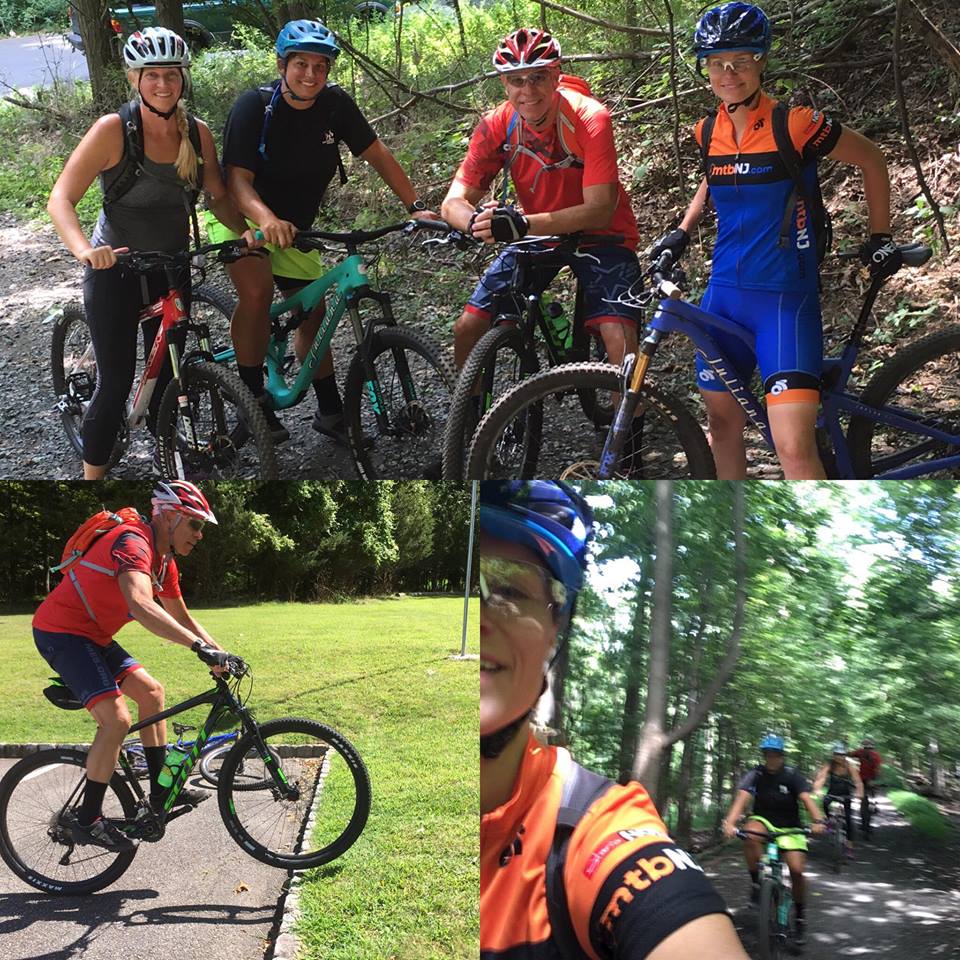
    Racing & traning was on hold this month while I recovered from a sprained ankle.  Soft tissue injuries seem to take forever to heal. Not easy to miss some of the big races – Boston Rebellion is one of my favorites, and I had hopes of making it to Windham. I took the opportunity to get out on my other wheels.


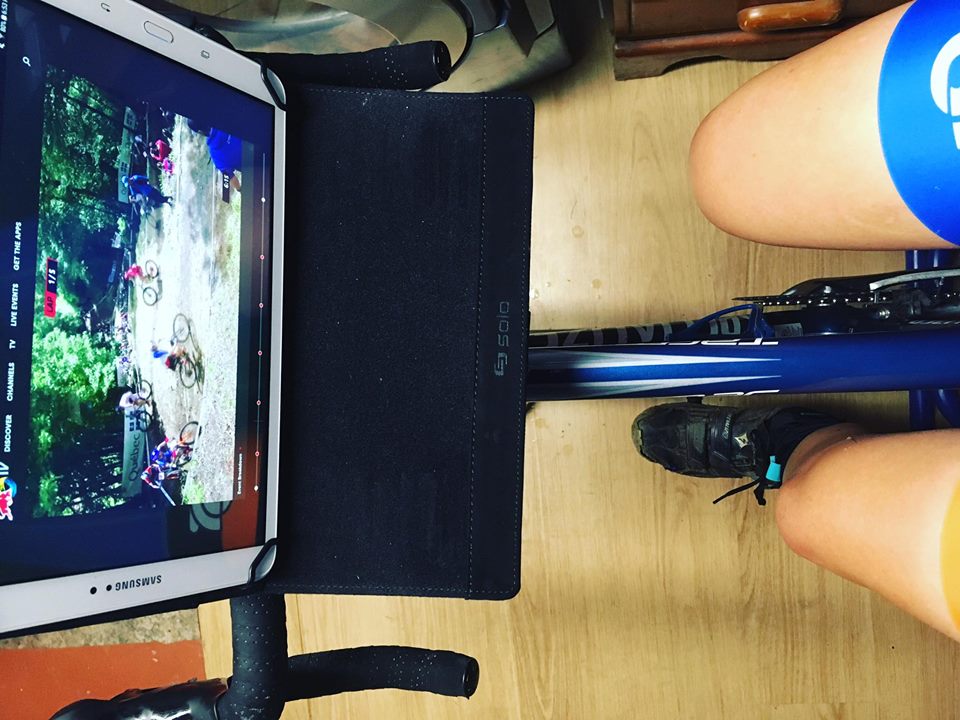
    After a few weeks of complete rest, I was able to get back on the trainer.

    Beginners Clinics

    With the break in training and racing, I found this an opportune time to start the Beginner’s Clinics Series of rides for Pedal Montclair. I’ve always felt that a series of clinics is a highly effective way to improve skills – focusing on just a few main skills and drilling those into muscle memory. Then building upon that foundation in each subsequent clinic.

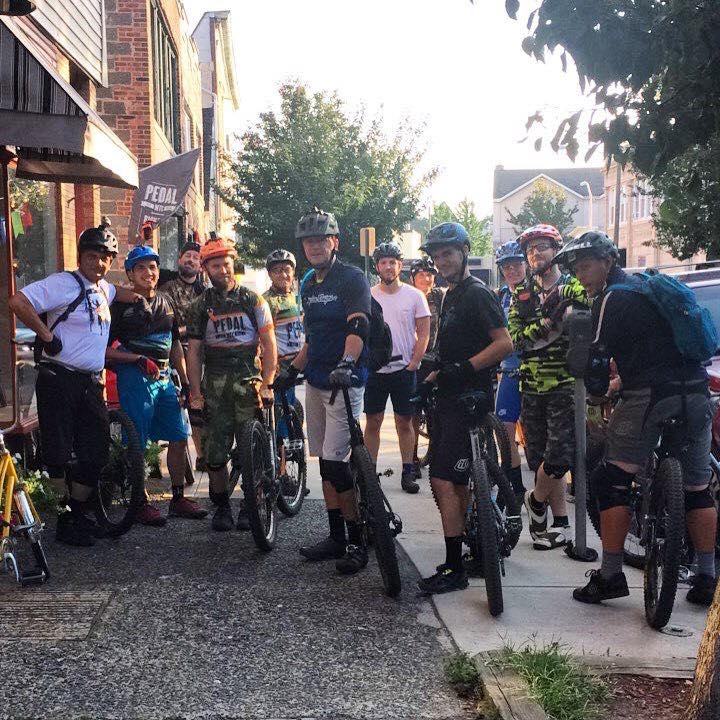
    Pedal Shop Rides

    By the end of the month, I was able to join back in on the Thursday Shop Ride.


  • The $5 training secret no one talks about

    The $5 training secret no one talks about

    I’m going to let you in on a secret training tool that has helped me immensely over the past couple years.
    It’s so simple you’ll probably scoff.

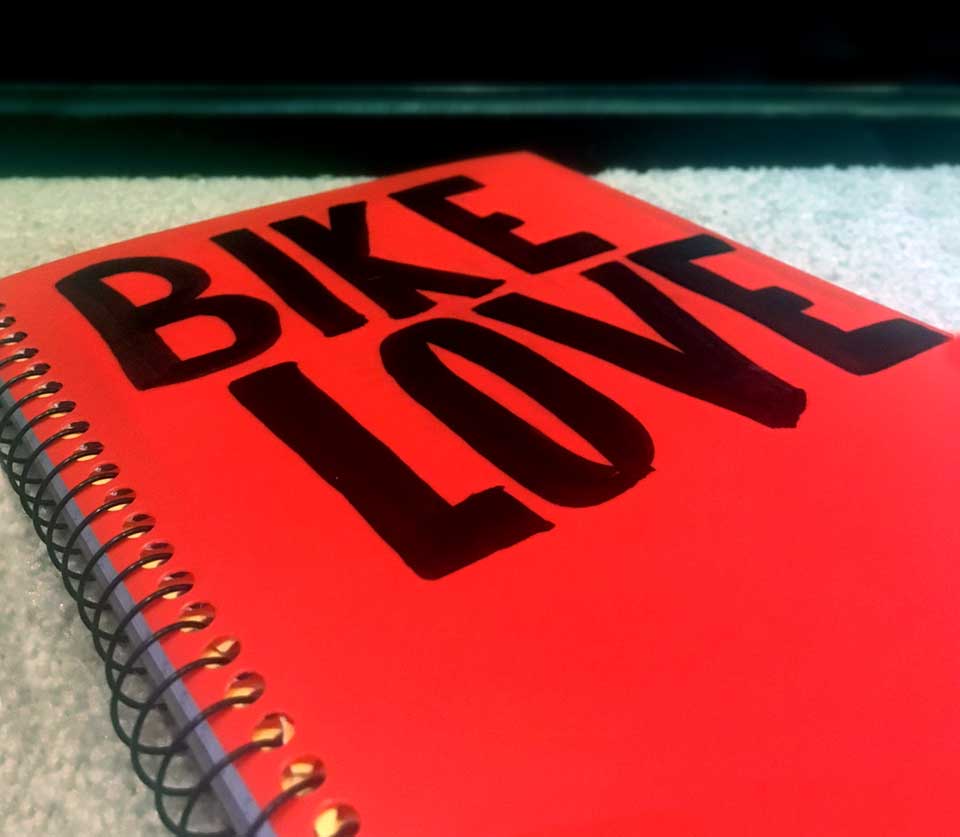
    It’s a “Bike Journal”.

    Before you close this post, bear with me. Bike journals are more common than you think, but no one talks about them. Just as seasoned cyclists don’t bother telling newbies that chamois and undies don’t mix, no one talks about their journal. There are many different types of bike journals, ranging from objective data recording to the pouring out of one’s soul, each offering a unique benefit.

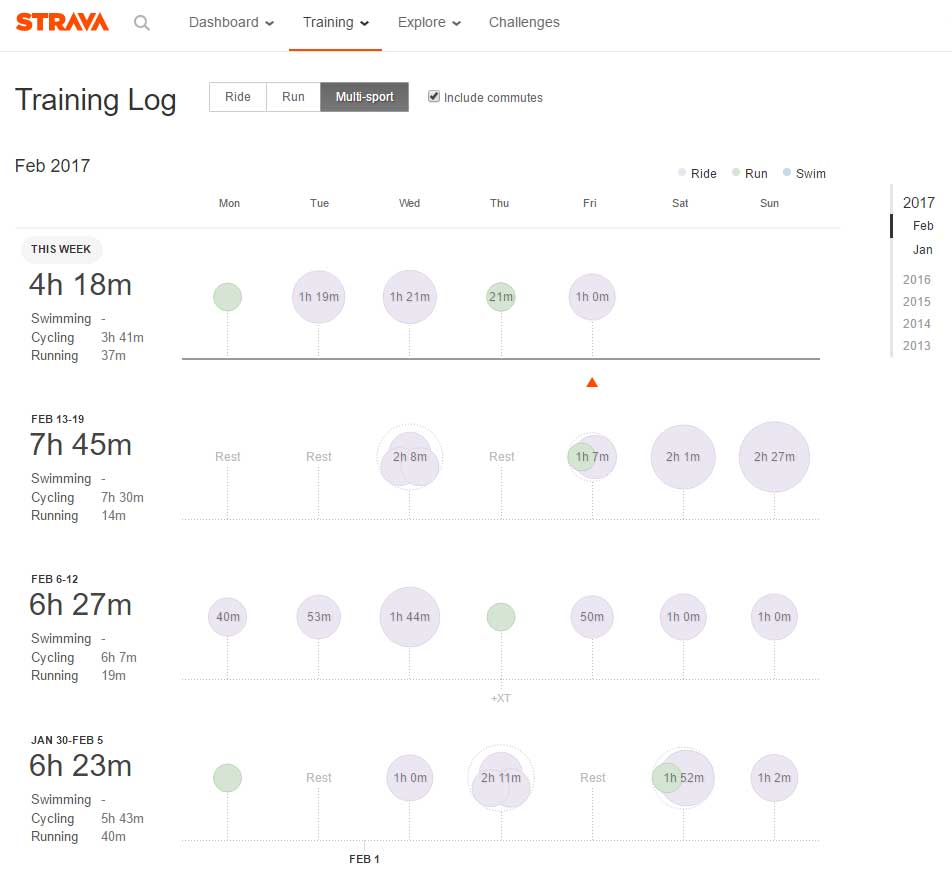
    Bike Journal  #1: The Training Log

    Arguably the most common journal athletes keep are training logs. Entries typically include workout distance, duration, intensity structure (intervals for example), cadence, heart rate and power. Some are likely to include comments about nutrition, perceived exertion and environmental issues. The best way to track and see your training progress is by logging it. As data collects over weeks, months and years, you have a means of evaluating progress and goal attainment.

    Bike Journal #2: The Training Blog

    These are digital blogs where athletes share the nitty-gritty details of their training. Though training is the central topic, the posts usually include everything in the athletes life that either supports or distracts from their training. More than you can imagine is covered – family, work, money, friends, travel, equipment, nutrition, weather, clothing, injuries, pets, socks etc…. The benefit of a public training blog is that a community of followers develops and provides feedback, support and advice. For many, this public awareness helps keep them accountable and less likely to let goals slide. See examples here.

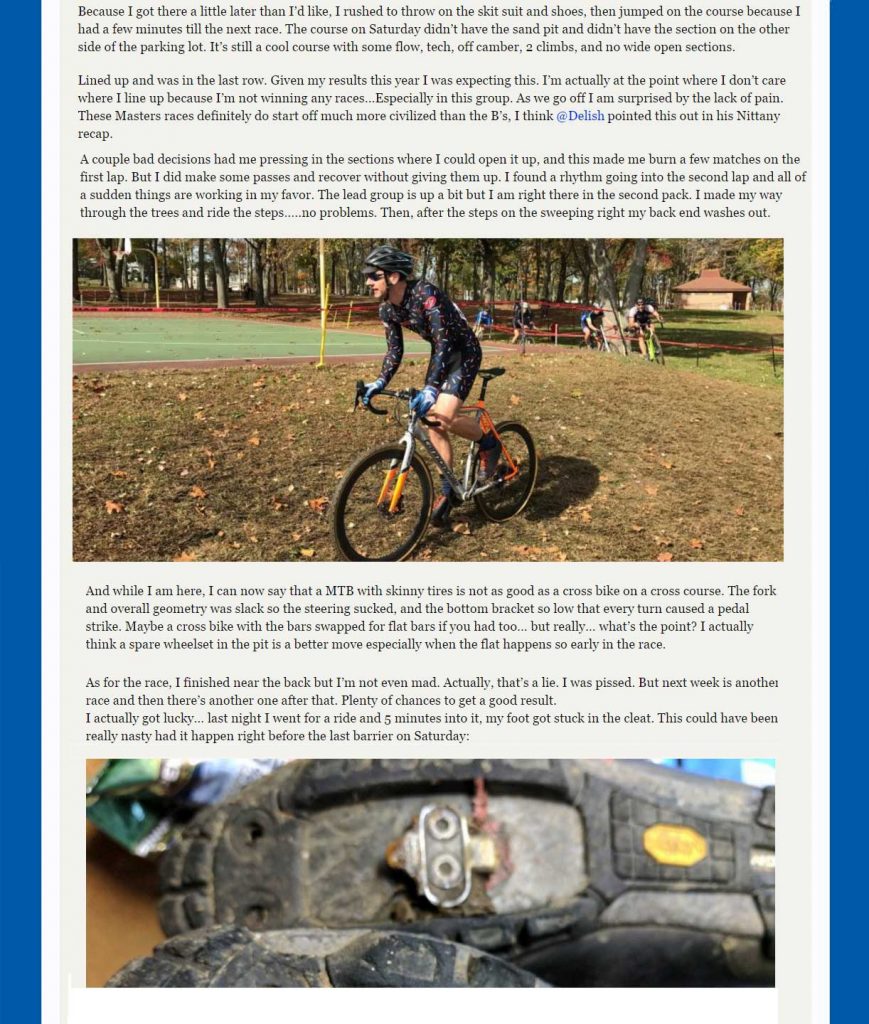
    Bike Journal  #3: Race Recaps

    As the name implies, ‘Race Recaps’ are usually limited to the experience an athlete has during a race, but will often include the state of mind and important events that impact the athlete heading into that race. The athlete may also include lessons learned, equipment used, whether the equipment was a good choice or not, as well as details of the terrain and course. Here are two public examples: Race Notes: Short Recap & The Heckle Report. I prefer to record mine the old fashion way with pen & paper.

    Bike Journal #4: Race Planning

    No matter what cycling discipline you adore, pre-race notes and goal setting will improve your race performance.  I find it particularly useful in preparing for an enduro stage race. While pre-riding the course, I jot down notes on my phone after each stage (pen & paper rarely survive the sweat & humidity of my pack). At the end of the day, I take my pre-ride notes and enter them into my bike journal with expanded details like overall stage characteristics, lines I’ve settled on, environmental markers denoting when certain sections are approaching, gear choice, seat height, tire pressure, how to tackle tricky features, etc…

    I also use my bike journal to set goals outside of specific race results. Of course winning would be awesome, but a podium finish is typically a culmination of a dozen different factors, all aligning at just the right moment and less a goal that I as an individual have absolute control over. So instead of obsessing over race placing, I focus on things I can control, specifically choosing one per race, for example:

    • Staying calm under pressure
    • Riding my own pace
    • Looking down the trail
    • Maintaining speed through corners
    • Maintaining speed over logs
    • Relaxing my arms
    • Elbows out, knees out
    • Etc…


    When race nerves hit, I find writing out my training and race preparations settles things right down. Jotting down positive comments and inspiring stories keeps my perspective grounded and priorities healthy. And when things aren’t going as envisioned, the journal is a great place to vent my frustrations.

    Bike Journal #5: Skills Development

    If you’ve attended a typical mountain bike skills clinic, you will know just how much material is covered in a very short time. It’s nearly impossible to remember all the details. Jotting down the main points that resonated with you is an easy way to optimize knowledge retention. The notes also become a great reference for trail rides. I pick one main point to focus on for the duration of a ride and practice, practice, practice.

    Bike Journal #6: Coaches Practice Notes

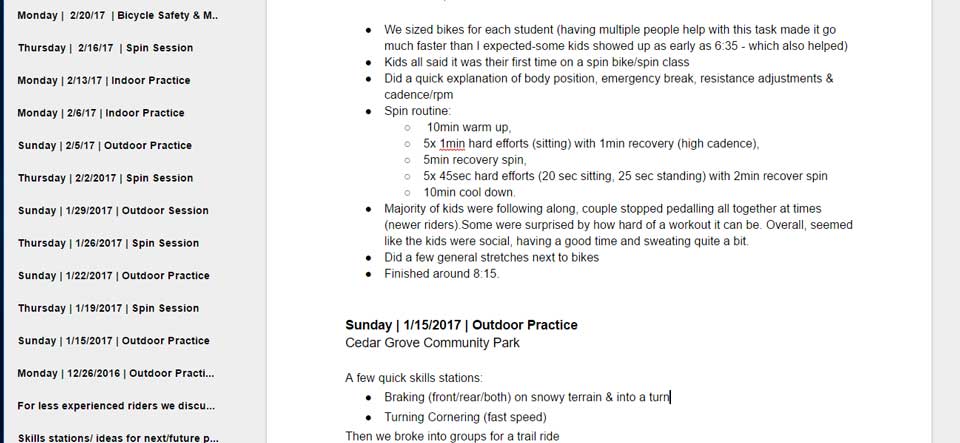
    Being an assistant coach on the NJ NICA team Essex Offroad, I quickly discovered the usefulness of writing out practice notes. With over 20 athletes on board with varying abilities, our team practices involve breaking into groups constantly. Once practice concludes, the coaches quickly chat about what worked, what didn’t, the progress of the students in their group that day, skills that need to be revisited, any incidents of note and to share ideas for future practices. We sum these comments up in a an email chain and it gets transferred into a shared Google document. Not only does this create an easy reference for practice planning, it also enables any coaches who were not at practice the means to stay up to date on team progress and happenings.

    All these uses and at a cost of $5 or less

    Given all the benefits a bike journal can offer, and the fact that a notebook costs under $5, is there really any reason NOT to use one?

    What about you?

    Do you use a bike journal? I’d love to hear about any other ways you find it useful that I didn’t cover. Comment below or send me an email.

    Thanks for reading!


  • I LIKE TO RIDE IN CIRCLES

    I LIKE TO RIDE IN CIRCLES

    AND THE SECRET TO RIDING FASTER…

    Before every race, you’ll see me in a corner of a parking lot or grassy field riding in tight circles in various positions. From a distance, I’m sure this appears silly. I start every bike ride – whether it’s casual or a Pro race – with a run through of basic mountain biking skills – tight cornering, figure eights, position, breaking, ready position among others.

    Why, you ask?

    First let me tell – the secret of the Australian Olympic Field Hockey’s dominating success for the past two decade is a foundation of basic and flawless skills.

    Australia has one of the strongest field hockey programs in the world, and I spent three years in Australia playing field hockey on the Buderim Rebels, a town club as well as the Sunny Coast, an exclusive regional team. I had the opportunity to train with the Australian Olympic Field Hockey Team and play against the Chinese Olympic Field Hockey Team.

    Whether my team was preparing to play an off-season scrimmage or an Olympic team, every single practice started the exact same way – a review of each basic skill, executed crisply and sharply.

    This repetition and emphasis of basic skills at every level of play resonated with me.

    Baseball, basketball, football, volleyball, soccer, basic skills are taught before game-play occurs. When I returned to the United States and began mountain biking at a competitive level, I realized that basic skills are not taught to new riders. When a person starts mountain biking, they hop on and hope for the best.

    Unfortunately, this practice allows for improper riding techniques to become ingrained mountain biking habits, which severely limit your growth and stunt your potential. Worse of all, when your racing or riding beyond your personal comfort level – like riding with more experience riders – we revert to our bad habits – causing damage to our bike and our body which could have been avoided.

    During 2014, I began to  focus on basic riding techniques and repeated them every time I got on a bicycle. My technical skills exploded. More experience riders complain when a ‘beginner’ shows up to a ride. For me, I think it’s a perfect opportunity to emphasize and execute basic skills flawlessly – a nice chill pace allows you to focus on multiple elements of each skill.

    Here’s the reality check: Basic skills are the foundation of excellent mountain bike riding.

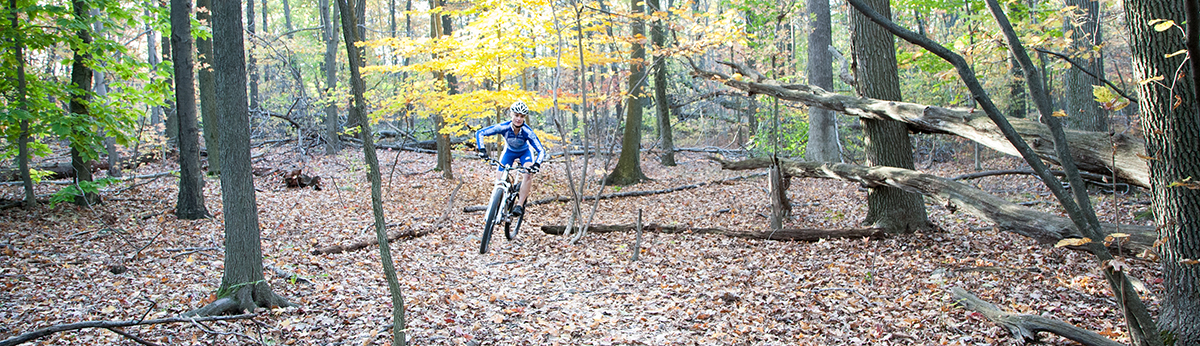
    Photo credit: Small Forest Photography