

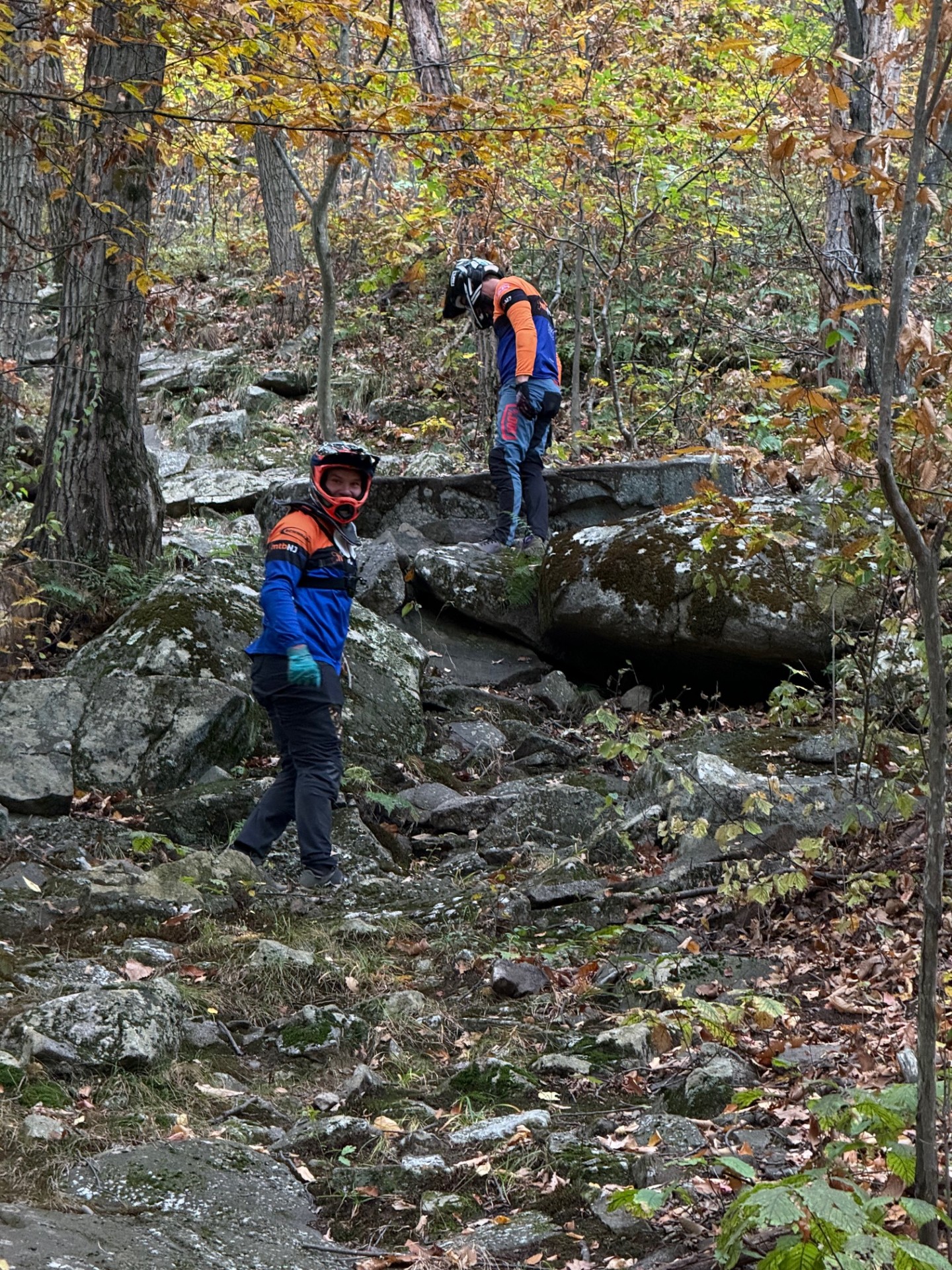
Technical riding is not your typical cruise through the park. It’s about picking your way through rocks and roots, muscling up steep pitches, navigating awkward slabs, managing tire grip on sheer rollers and keeping momentum on trails that seem designed to throw you off your line.
Northern NJ is packed with this kind of terrain—one brutal, character-building trail system after another. For many new riders, these early experiences are affectionately called “death marches.” But once things start to click, technical riding becomes addictive: a puzzle, a challenge, and a whole new style of fun.
Here are four practical tips to help you improve—and maybe even start enjoying—technical mountain biking.
LEG STRENGTH FOR POWER ON DEMAND
Raw power is one of your biggest assets on technical trails. Yes, aerobic fitness matters. But technical riding is dominated by short, high-intensity, repeatable efforts—those quick torque bursts needed when your momentum stalls.
Slow speeds on chunky terrain require more force to keep the bike moving. Whether you’re grinding up a steep boulder, pushing through sandy patches, or clawing over an off-camber slab, strong legs give you a massive advantage.
Tip 1: Build raw leg strength.
Mix these movements into your weekly routine:
At the gym:
- Leg presses
- Squats
- Leg extensions
- Leg curls
At a park:
- Bench step-ups
- Box jumps
- Walking lunges
- Squat jumps
At home:
- Body-weight squats
- Bulgarian (Hungarian) split squats
- Single-leg squats
- Front/back lunges
- Mountain climbers
- Glute bridges
Short on time?
Work “exercise snacks” into daily life. Do 10 squats before leaving the bathroom, or hit a few bench step-ups during your dog walk. Little bursts add up.
MASTER SLOW-SPEED BALANCE
Momentum is your friend—but technical trails often don’t give you much of it. When your speed drops, you have to do more work to balance the bike. Excellent slow-speed control is what allows skilled riders to make awkward moves look easy.
Balance is also crucial in group rides. If the person ahead of you dabs or stops, being able to track stand or crawl forward buys you time and space without putting a foot down.
Tip 2: Practice Track Stands & Slow Riding
The simplest drill? Ride as slowly as possible. From there, work toward track standing:
- Roll to a near-stop.
- Pause for a moment.
- When you start to tip, add just enough pedal pressure to regain balance.
- Slow again and repeat.
Over time you’ll build the core and stabilizer strength that makes technical balancing second nature.
It’s easy to practice:
- While waiting in the parking lot
- During regroup stops
- At the trailhead after your ride
- Anytime you roll up to your car
The more often you practice, the better your balance becomes.
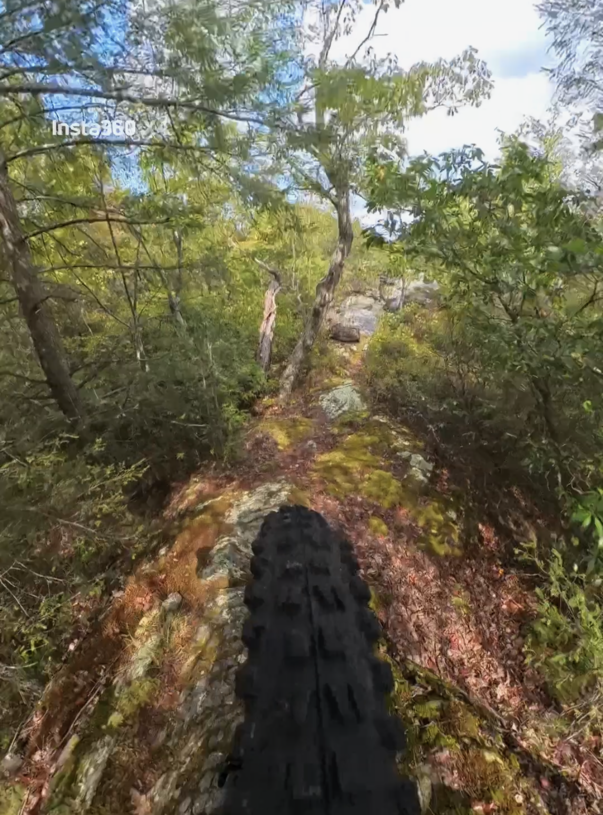
TRAIN YOUR NON-LEAD LEG
Every rider has a “default” foot that naturally goes forward when standing on level pedals. That’s fine—until the trail throws something at you when you’re leading with the wrong foot.
On technical trails, with back to back obstacles you rarely have time to swap feet before a drop, roller, or awkward feature. Being comfortable with either leg forward is a major advantage and helps prevent those moments where riders panic, bail, or slam on the brakes.
Tip 3: Develop Your Non-Lead Leg
Start by riding an easy downhill stretch with your non-dominant foot forward. It will feel strange. That’s the point. Practice this until you feel comfortable with either leg forward.
As you improve, progress to the ‘wrong foot forward’ while doing:
- Wheel lifts
- Bunny hops
- Small log-overs
- Switchbacks
- Rollers
You’ll feel like a newbie – it’s humbling, but once you gain control with either foot forward, your technical riding confidence skyrockets.
UPPER-BODY STRENGTH FOR MORE CONTROL & SAFETY
Technical riding also demands significantly more upper-body strength than mellow trails. Because you’re out of the saddle so often, your arms, chest, forearms, and hands absorb a ton of force.
Any time you’re supporting more of your weight with your hands—like rolling into a steep chute, lifting the front wheel over a log, twisting the grips for extra traction, or braking hard after a roller—you’re taxing those muscles. Strengthening your upper body helps you stay stable, react quickly, and maintain control when the terrain gets hectic.
Tip 4: Train Your Upper Body Like It Matters
Improving your upper-body strength helps you:
- Stay stable when things get bumpy
- React quickly to trail changes
- Control front-wheel placement
- Maintain confidence on steeper features
- Keep yourself upright when you land hard off a drop or jump
Pushups, rows, planks, dead hangs, and grip work will all pay big dividends on technical terrain.
Don’t have a ton of time? Work little bursts of work into your day – waiting for the coffee to percolate? Do 20 inclined pushups against the kitchen counter. Watching TV? Do a set of push-ups to failure between episodes or commercial break.
KEEP AT IT!
Technical riding isn’t something you master overnight, but every small gain adds up. Stronger legs, better balance, comfort with either leg forward, and a more powerful upper body all work together to make tough trails feel like a rewarding challenge instead of a punishment. Keep practicing, stay patient with yourself, and celebrate the little breakthroughs—because they’re proof that you’re becoming a stronger, more confident rider.
Leave a Reply