

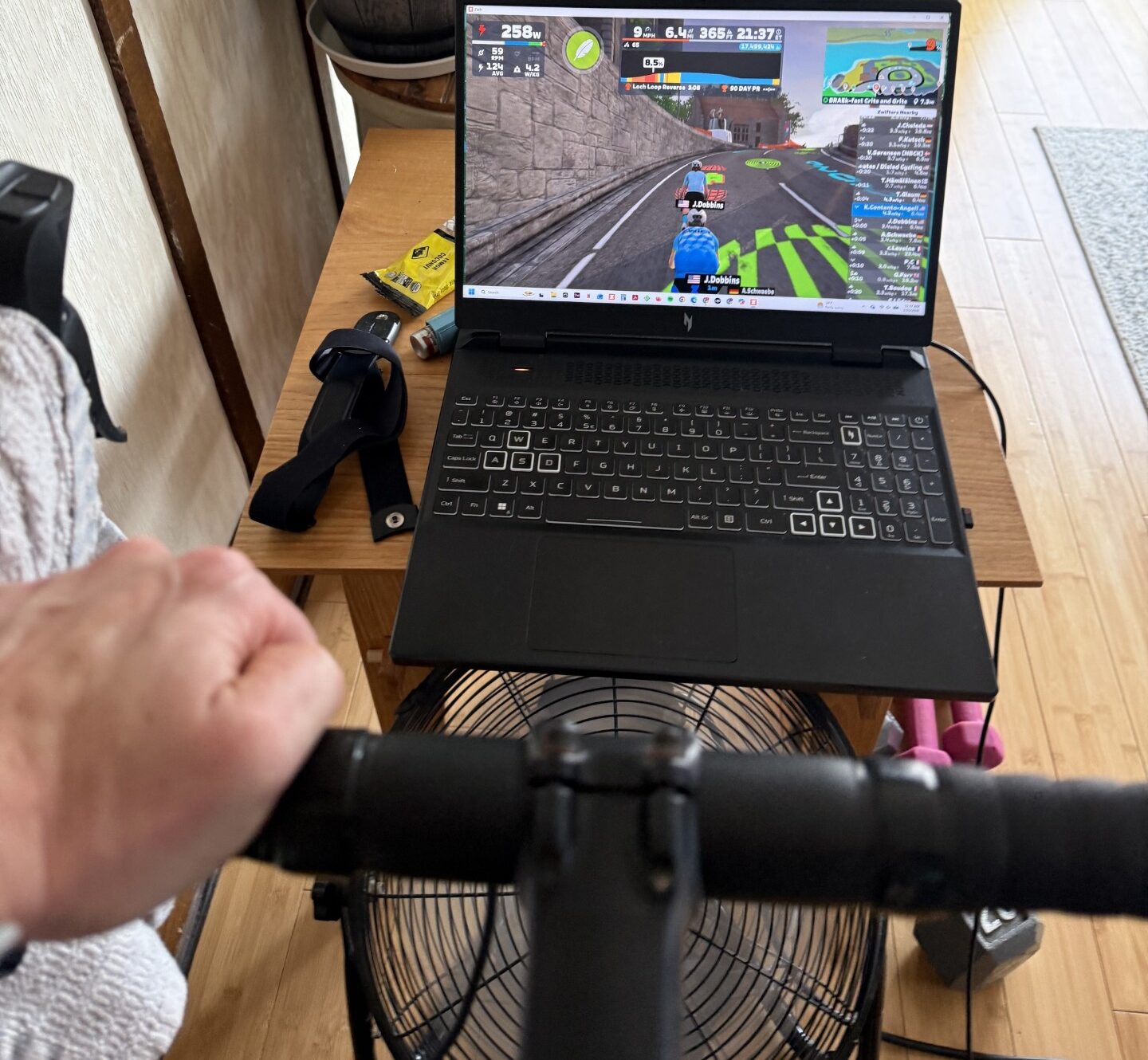
My sprint workout today went terribly. I blew myself up a bit on the first sprint and set myself up for a major suffer fest. The workout was 3 sets of 12 x 10 second sprints with 20 seconds of rest. I can usually smash this type of format, and I typically enjoy watching the power reading and striving to surpass the last effort.
My inner voice was immediately chanting very negative things, belittling my effort, swearing and over dramatizing the situation. I caught myself, told myself to shut up and starting searching for a new target.
Cadence, perceived effort, repeatability, heart rate – all excellent options.
I’ve had workouts like this before, and here’s what i’ve learned:
- Don’t focus on the ‘failing’ part. As soon as you know something is off, find a new focus to make the most of what you can do right now, for the remainder of that workout.
No one is 100% on all the time – life, relationships, work – it’s all a realistic part of any athlete, and it all impacts your performance. But don’t give up if you’re having a bad day. Don’t waste the entire workout – recognize, adjust and do what you can to get after it.
This bears repeating: It’s not a failure to respond to your body.
That’s how you build resilience – know yourself, recognize what you’re body is saying and adjust on the fly. Above all, don’t give up.
When you finish the workout – take a moment to reflect on what you think led to the difficulty: Poor nutrition, extra stress, minimal sleep, over-training, targets beyond reasonable reach, etc.. and how you can prevent that from impacting the next workout.
Then, in a few days when you’ve recovered and you’re back to the sprint workout of the week – try the exact same workout again. For me, the second time I try a workout I “couldn’t do” as listed, I crush it on the next attempted.
Here’s the thing to keep in mind: any amount of strain you put your muscles and body through creates an adaptation. Your body responds to stress, so if you keep pushing—even if it’s on a different metric than you originally planned—you’ll still become stronger and faster.
The same is true of resilience.
Resilience isn’t built on the days when everything goes according to plan. It’s built on the days when nothing does, and you choose to keep going anyway. Every time you recognize that something is off, adjust your expectations, silence the negative self-talk, and finish the work that’s in front of you, you’re training your mind just as much as your legs.
Yes, it sucks to miss your workout targets. But don’t let one bad day become a wasted day. Adapt. Refocus. Finish what you can. Sometimes the greatest gain from a workout isn’t the power you produced—it’s the resilience you built.
Leave a Reply